Tag Archive | "keyboard"

Asus Makes Eee Pad Slider Official With Press Release Following FCC Sighting

Tags: , , , , , , , , ,


When we reported earlier in the week that the Asus Eee Pad Slider had passed through FCC approval, there was no official announcement from Asus. However, yesterday, the official press release announcing the device as part of the Asus product line went live on the Asus website. The official launch brings some additional tidbits that further pique our interest in this device.

One of the trends that is disturbing me in the Android infrastructure is the implementation of proprietary solutions to various use-case problems in new premier devices. Asus bundles Asus WebStorage with the Slider as a solution to cloud storage and populating an on-line archive with data you might need to access from multiple mobile devices. It is a nice touch (I guess), and I am sure one or two users will decide to use this solution instead of already existing cloud file services like Google Docs and DropBox, or cloud notebooks like Evernote or Springpad. My main issue is that every time a manufacturer deploys one of these in-house services on a tablet, the app is usually not uninstallable. The problem goes away if you wipe and root, but if you want to just run the device stock, these pre-loaded apps are annoying. It is very clear that the pre-loaded epidemic that plagued desktops and laptops for so long is creeping into the tablet market, as well.

Fortunately, that rant gets any negative take-aways I have from the press release out of the way. Most everything else is good news, or at least enticing news until we see some more definition from various allusions in the release. One of those items is in the area of the Slider’s ports. We were aware of the microSD port, but the Slider’s specs now also call out a 16/32GB Embedded Multi-Media Card (eMMC) port. This is called out as a discrete port in addition to the microSD port, so it makes me wonder if this will be a full-sized port like the Toshiba Thrive and Dell Streak 7 feature.

Also revealed is the fact that the device will be available in both pearl white and metallic brown color schemes. That designation appears to apply to the brushed layer applied to the slide-out keyboard, as can be seen in the pics attached. Android 3.1 will be pre-loaded and Asus indicates an upgrade to 3.2 as an OTA delivery, as we would expect. In case we were not certain before, the launch announcement confirms an IPS display (similar to the one used on the iPad) with a claimed 178 degree wide angle of view.

You can peep the specs in our product database here. A link to the press release is included in the source citations below. There is nothing in the press release on pricing or a release date.

So…is anyone holding off on that Asus Eee Pad Transformer purchase to snag a Slider instead?

Sources:

Gizmodo

Asus Eee Pad Slider Press Release

Motorola Droid 3 Official, Available July 14th–5-row QWERTY Keyboard Excites!

Tags: , , , ,


Solana_FrontHorOpen_1, 3/9/11, 9:48 AM,  8C, 3900x3300 (1147+2393), 100%, bent 6 adjuste,  1/15 s, R63.9, G48.0, B75.7 Though it showed up on the web back in March, the Droid 3 has finally received the official treatment. The phone will make it’s debut on July 14th on Verizon for $199 w/ contract or with an upgrade.

Let’s dig into the specs, shall we:

  • Android 2.3 (Gingerbread) OS
  • 4-inch capacitive touchscreen (Gorilla Glass) ‘qHD’ display @ 960×540
  • Sliding 5-row QWERTY keyboard
  • Dual-core CPU @ 1GHz
  • 8MP rear-camera capable of 1080p record and playback (through HDMI-out)
  • 16GB built-in memory
  • MicroSD card slot supporting up to 32GB cards
  • World Phone – WCDMA 850/1900/2100, CDMA 800/1900, GSM 850/900/1800/1900, HSDPA 10.2 Mbps (Category 9/10), CDMA EV-DO Release A, EDGE Class 12, GPRS Class 12, HSUPA 5.76 Mbps
  • WiFi b/g/n & Bluetooth 2.1
  • GPS & Magnetometer (compass)
  • 3G (HSDPA 10.2 Mbps (Category 9/10), CDMA EV-DO Release A, EDGE Class 12, GPRS Class 12, HSUPA 5.76 Mbps)
  • Micro HDMI-out
  • 1540 MAh battery
  • 184g
  • 64.1 x 123.3 x 12.9 mm

The processor is unspecified, but considering the dual-core nature and 1080p capture/output support, I think it’s safe to say that we’re looking at Nvidia’s Tegra 2 dual-core Cortex-A9 CPU.

droid 3 frontThe obvious omission here is 4G LTE which is a bit of a shame, but if you’re the internationally-traveled type, you’ll appreciate the inclusion of global bands.

I’m most excited about the phone’s 5-row QWERTY keyboard. While devices like the Nokia N900 had great keys, the keyboard had only 3 rows! With so few rows, using punctuation and symbols becomes incredibly hectic and really ruins (slows) the typing experience on what would otherwise be a great keyboard.

The Droid 3’s keyboard, on the other hand, has a dedicated number-row which will definitely reduce the amount of modifier-key usage and this will serve to increase the typing speed. I haven’t had a chance to use the keyboard just yet, but they keys are looking improved over the 4-row Motorola Droid 2 that came before it!

Eee Pad Transformer Official Launch on Friday

Tags: , , , , , , , ,


ASUS-Eee-Pad-Transformer Friday is turning out to be a good day. The iPad 2 launches in Europe (although I still don’t see any official pricing in Germany) and it’s my Birthday. Now, I hear that the Eee Pad Transformer is launching too. Decisions decisions!

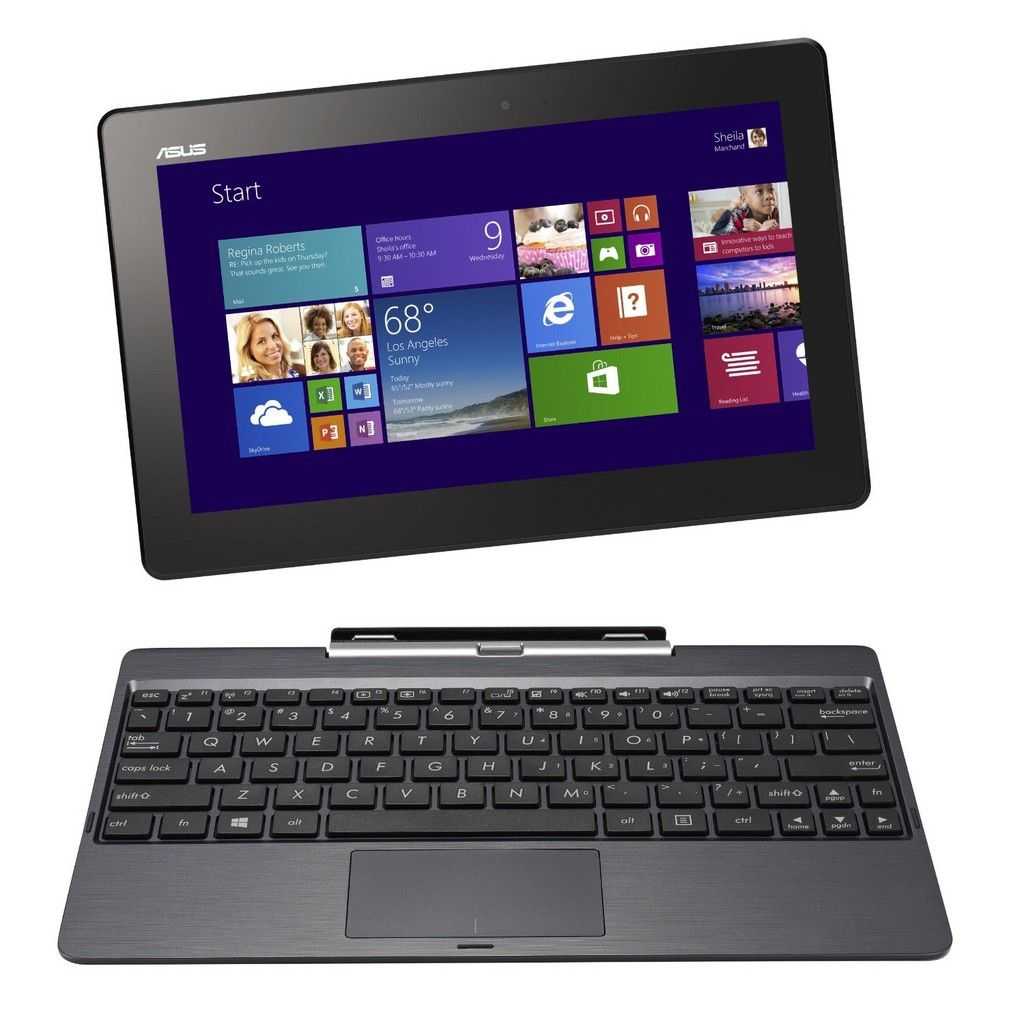
The Eee Pad Transformer is an interesting product because it takes the idea of the smartbook one step further. It uses the Honeycomb operating system (which could enable a far superior laptoping experience than 2.x ever did) and it uses a keyboard mechanism that can be un-docked to allow tablet-only usage.

I tested the Transformer out at mobile world congress in February (video below) and wasn’t too impressed with the weight but full USB ports made me wonder if ASUS are building some nice USB hosting capabilities. The weight with the dock also seems a little over the top. With connectors and an additional battery in the keyboard unit, I’m expecting the total weight to tip 1KG. The unit I tested wasn’t running Honeycomb.

Pricing has me a little worried. The price for the tablet seems OK at 399 Euro although confirmation is still needed on storage and 3G capability. 32GB and 3G included is what I’m assuming at this stage. The price of the dock could add 120 Euro to that. The price isn’t too bad when compared with high-end tablets but when compared with the Tegra-2 based Toshiba AC100 smartbook (under 300 Euro with 3G) you get the idea that there’s a huge margin being added here and that the price should come down by at least 100 Euros over time.

The March 25th launch is for Taiwan only at this stage and will only include pre-order. Actual availability around the world is still unknown but we’ll probably hear more on Friday.

VIa Netbooknews

Leaked Droid 3 Photo Shows Improved Keyboard With Dedicated Number Row

Tags: , , ,


Looks like Motorola is working on the successor to their Droid # phones. A photo of the Droid 3 has been leaked over at Howard Forums (hat tip to GottaBeMobile for pointing it out) and in addition to a design that departs from the Droid 2 — and instead harkens back to the original Droid — we can see that the keyboard has received a lot of work.

droid 3 keyboardThe hardware keyboard on the original Droid was a major selling point for many people. Unfortunately, the keyboard really under-delivered. Motorola made progress with the Droid 2, but typing speed still suffered a lot when you wanted needed to punctuate. Here’s an excerpt about the keyboard from our Droid 2 review published last September:

droid 2

Typing alphabetical characters on the Droid 2’s keyboard is like cruising down the highway – using punctuation is like sitting in bumper-to-bumper traffic. The keyboard is speedy thanks to fairly good tactical feedback, but lack of auto-correction that is commonly found on modern OSKs means that you end up having to do more work than you really should. Things get messy when one key is bound with both a shift- and alt-modifier punctuation. Not to mentioned that in order to access the extended symbols list, you have to press alt, space, then tap your selection from the popup menu (taking your fingers from the keyboard slows down the process even more)

Things are looking up for the Droid 3’s keyboard. The keys closely resemble those on the N900 [keyboard section of our review] (which had great feedback and were very easy to type with), but unlike the N900, the Droid 3 has a dedicated number-row (5 rows total) which is very important for speed. By moving the numbers to their own keys, they can free up some of the punctuation congestion that was an issue on the Droid 2 and N900.

Of course, adding an additional row to the keyboard means that you’ll either need to make the device larger, or shrink the keys. In the photo we have, the number-row keys on the Droid 3 are half the height as the others.

nokia n900 keyboardNokia decided to make nice large keys on the N900, and they felt excellent. Unfortunately, they could only fit three rows of keys on the device, and using symbols and punctuation really slowed things down.

Here’s to hoping that the Droid 3 keyboard will combine the strengths of the great key design on the N900 with the less congested punctuation typing that comes with a dedicated number row.

Galaxy Tab Keyboard Case

Tags: , , ,


There are rows and rows of accessory manufacturers at every computing expo and much of it is the same stuff over and over again. This Bluetooth keyboard case for the Galaxy Tab stood out though.

Galaxy Tab Keyboard (6) Galaxy Tab Keyboard

Galaxy Tab Keyboard (2)

Galaxy Tab Keyboard (3).jpg Galaxy Tab Keyboard (4).jpg Galaxy Tab Keyboard (5).jpg

Galaxy Tab Keyboard (1).jpg

The keyboard was a rubber membrane design and in my short test I recon it was faster than thumb typing but you do need to concentrate hard. Still, it’s a nice little compact solution if you’re looking to assemble a smart-book-like device.

Rosen Groups, Shenzen, China are the people you need to contact if you fancy importing a box of these at $27.50 a piece. If you do, put me down for one please!

You’ll also find a few other images in the gallery and check out their website for more info and stay tuned because we might be popping back to check out their Galaxy Tab stands and chargers too

Soft Keyboard Wins Thanks To Galaxy Tab

Tags: , , ,


Hard vs Soft

I didn’t expect this to happen but I’ve reached the point where an on-screen keyboards is better than hardware keyboards on my mobile devices. The soft keyboard on the Galaxy Tab is now my fastest mobile text-input device.

Can you remember the on-screen keyboard delivered that was delivered with XP? Oh….my…God!

image

It was meant for accessibility and emergency use and it was basic, to say the least. The XP Tablet Edition keyboard wasn’t much better so it’s no wonder many of us went for hardware keyboards on our mobile devices. I went for quite a few of them.

IMG_6159

The appeal of a weightless on-screen keyboard was always there but in practice, the execution was terrible. Either the devices were too heavy or the keyboards just weren’t responsive enough. Resistive touchscreens, screen sizes,  lack of haptics and dumb software didn’t help. Sure, the hardware keyboards were often poor too, Using long-throw keys for thumb-typing isn’t optimal but there were some good ones out there.

With the introduction of capacitive screens and intelligent on-screen keyboards, things started to change. The iPhone led and my own experience hit a peak with the HTC Desire. Still, portrait mode isn’t easy on these single-hand devices and landscape mode was blocking most of the screen so I still longed for something that slides-out but when I got the Galaxy Tab, the crossover point was reached. I am now faster on the Tab than on any other hard or soft mobile keyboard. With concentration, I can reach 80% of the speed I have on a full size keyboard and without, an easy 70% and I still have over 50% of my screen free when I’m using it.

How am I using it?

See this article with video demo. I’m using the device in portrait mode and thumbing on the Samsung keyboard with about 30% haptic feedback strength. Since that video was made, I’m even faster.

The low weight means that device doesn’t get top heavy. The width means the thumbs can cross-over across the keyboard.

The capacitive screen and haptics work quickly and give the feeling of real physics although the OSK can get held back occasionally meaning you have to type ahead and hope it buffers. It usually does but that problem definitely needs sorting out.

The intelligence in the Samsung Keyboard is great. I have to assume they are using variable hit-patches. (e.g. the hit area of the U increases if you type a Q and so on) and XT9 predictive text is more value than hindrance once you get used to it. I don’t use word completion but you’ll see the settings I do use below…

xt9

That combination of virtual physics, size/weight and intelligence has me using the Tab for far more than I thought possible. I’ve written 5 reasonable sized blog posts and a ton of emails, Tweets, IM’s, comments and annotations. I’ll be taking it to CES and I bet I use it a lot. Thank goodness the battery life is good!

Landscape mode is a problem for the on-screen keyboard but I rarely use the device in that mode. Video playback usually forces it along with the occasional rotate needed for photos.

Could it be improved? Yes. I mentioned the occasional pause above and I think there’s scope for a wider screen with 800 pixels width. I’d also  like to see an option for a dedicated number row. Haptics can always be improved too but right now I’m very happy and importantly, no longer lusting after hardware keyboards on my mobile devices.

Anyone else experienced this cross-over point with a mobile on-screen keyboard?

Galaxy Tab – Keyboard Dock Pics

Tags: , , , , ,


We’ve just come from a meeting with Samsung where they pulled out a rather nice keyboard accessory…


Galaxy Tab Keyboard _3_.JPG Copy of IMG_4711.JPG Copy of IMG_4707.JPG

Full gallery here.

This was a prototype. Pricing not known but we’re guessing it will be well over 50 Euros.

Galaxy Tab Keyboard (6)

Video coming very shortly.

Swype Brings Hope to Those Who Hate Virtual Keyboard’s

Tags: , , ,


The first Android tablets are soon to hit our stores in what can only be described as the tip of a very large iceberg, every major and not so major manufacturer has a device on the horizon it would seem. Text entry on these Android devices is going to be important as it will be done through a virtual on-screen keyboard and plays a big part in the overall experience of a device.

Swype has a different approach to text entry which involves moving your finger over the letters in the word you require rather than individually pressing each letter. I thought the best way to show this to you is in a video;

Already major manufacturers are recognising the potential of this type of text input and even the upcoming Motorola Droid X [product details] comes with Swype as the standard text input method.

Although the Swype beta is now closed you can still register for the next test and hopefully we should see this Android market soon.

I’m Dying for Dial Keys on the iPad – Mockup Video Demo

Tags: , , ,


photo (2)I was really surprised that Apple didn’t do anything “magical” or “revolutionary” with the iPad’s [Portal page] on-screen-keyboard. The iPhone’s was definitely revolutionary because it was probably the first truly viable OSK – thanks to some intelligent software design and a capacitive screen instead of a resistive one. The iPad’s keyboard has that same inteiilgent software design, and a nice big capacitive screen. The problem is the big part. The iPad’s keyboard works well, but it really only works well if you can set it down on a desk in front of you so that you can touch type on it. If you are walking around with it in your hands, it works quite poorly for thumb typing. This fact alone makes the iPad annoying to use for typing if you don’t have something to set it down on.

dial keys Even since I got the iPad in my hands, I’ve been wishing for a Dial Keys-style keyboard implementation. Dial Keys, if you’ll recall, is a piece of Windows based software that was designed for touchscreen UMPCs. Dial Keys places a split radial keyboard at the corners of the device, which puts keys right in the range of one’s thumbs. If Apple allowed developers to modify the keyboard on the device, I’m sure we would have already seen something similar.

I made some mockup graphics to put on the iPad just to see what Dial Keys on the iPad would look like:

Typing on the iPad [video]

Tags: , , , ,


photo It’s only been two days since we got our hands on the iPad, but I wanted to get this out there early as there are a lot of questions. I’ve made a video to try to give you a sense of what it really looks like to type on the iPad in real conditions. I’ve also put together a chart using a simple web based typing speed test which I ran on the iPad and on my computer for comparison:

Portrait (touch type) Landscape (touch type) Portrait (thumbs) Landscape (thumbs) Notebook keyboard
Words per minute 57 57 39 37 92
Mistakes 9 5 18 16 3

Don’t read too deeply into the Mistakes row, as some of the mistakes shouldn’t really have been counted due to the fact that the iPad does auto-correct some words (something that didn’t sit well with the typing test I used). What is significant is the WPM. While this test wasn’t scientific, I would say that the results do a good job of representing the experience in each given mode, but I was surprised to find that I typed at the same WPM in portrait and landscape touch typing. Landscape touch typing felt much more comfortable because the keys are larger than the portrait keyboard. For the touch typing sections, I sat the iPad flat on a table in front of me and I typed with all fingers, just like you’d do on a real keyboard. For the thumb tests, I held the iPad in my hands while typing with my thumbs.

I’m pretty impressed with the speed that could be achieved with the touch typing in both portrait and landscape modes. 57 WPM (and better than average accuracy due to good auto-correction and other factors) is pretty darn good speed for an on screen keyboard (OSK). The issue here is that top speed can only be achieved while you are sitting down and can sit the iPad in front of you. You won’t be walking around with the iPad churning out 57 WPM while on the go.

IMG_0010 The iPad’s OSK is probably the best OSK yet implemented on a Slate device of this size. I’m sure that there are some Tablet PC gurus pulling their hair out right now, but I definitely have never seen an OSK that is this effective on any other device of this size. This is due to a combination of good hardware (accurate and responsive capacitive touchscreen) and intelligent software (auto-corrections and invisible landing area increases based on the word that you are likely to type). It may be the best, but the experience really doesn’t feel quite right. It is especially uncomfortable when typing with one’s thumbs, but unfortunately this is probably the best way to have meaningful typing ability while being mobile with the iPad. The other alternative is to hold the iPad in one hand and type with the other, which works fine for short URL entries, but wouldn’t be my method of choice for writing out a few sentences. After typing a short paragraph for the typing test, with my thumbs in landscape mode, my wrists quickly started to become sore. I couldn’t see that being a viable method of input for more than a few sentences. I mentioned that the keyboard would be an issue in my article from February — The Big Flaw with Big Slates (Yes, Even the iPad), and I’m finding it to be the biggest challenge to the usability of the iPad so far.

What sort of solutions could Apple have considered rather than simply a big OSK? Well perhaps Apple could have looked into something like Swype which inputs words by recognizing particular shapes that one creates while dragging a finger around to letters on a keyboard. A multitouch capacitive screen such as the one on the iPad is also ripe for a Dial Keys split-keyboard implementation. I hope they at least tossed the idea around during the creation of the iPad, and I also hope that they are still considering it. I’m really dying for Dial Keys on the iPad right now!

Edit: Prompted by turn.self.off from the comments, I just did a quick test to see how many keys the keyboard would allow to be pressed at once and the answer is 11 — one more than the natural number of digits on one’s hands… unless, of course, you are Antonio Alfonseca.

The Big Flaw with Big Slates (yes, even the iPad)

Tags: , , , , , ,


ipad kb More than the actual product itself, I was excited for Apple’s iPad unveiling because I was waiting for them to show the world their innovative solution to input on a large keyboard-less device. I was very surprised to find that they didn’t offer anything innovative. Instead, the iPad uses a simple iPhone style keyboard (albeit a larger one). The inability to efficiently input text on these large slates is going to be responsible for their extinction.

The companies making these big slates, in an attempt to justify the slow keyboard input, would like us to think that slates are all about content consumption. And surely they are; larger slates will be great for feeling like the web is in your hands. But there is a certain degree of input that will always be necessary to access the content that we’d like to consume (until computers can read our minds, that is…) and people will always want to be able to effectively write short messages when they are connected to the web. My iPhone is all about consumption of web content as well, and I type on it all the time. From tasks, to tweets, good input is a necessity.

Apple changed the landscape of mobile devices by realizing that a well designed on-screen-keyboard (OSK) could have serious benefits, such as being able to remove the keyboard when it wasn’t being used, and being able to dedicate the entire screen to the content.

A good OSK works great with a device that is small enough for one’s thumbs to reach nearly all the way across the screen. The nature of a thumb-board means that only two digits are in the way of the screen, offering great visibility, which is very important for an OSK because of the obvious lack of tactile information. Even the way that the device is held makes the OSK thumb-board concept work well — thumbs come in from the side and are naturally lifted away from the screen allowing the user to see the next key that will be pressed.

As the size of slates increases, people start doing that awkward thumb stretch to try to reach a key that is out of range. In order to do the thumb stretch maneuver, one must change up the grip on their device just to hit one key, then switch it back when they are finished. This slows down the rate of input and starts to break down the overall experience of using the device.

jj5 vega
The real issue is when slates get so big that thumb typing isn’t even viable. How can one use something like the iPad while walking? The only way seems to be holding the device with one hand and poking at the keyboard with the index finger with the other. Even if the iPad is sitting in one’s lap, trying to touch-type on an OSK will be a pain. Why? For a few reasons; the first of which is visibility. While the grip on a small mobile device means that thumbs can move quickly and effectively away from the screen, attempting to lay your hands on a large Slate with an OSK will sufficiently block the keyboard from view.

What’s more, there are no palm rests on these devices. The experience is not going to be comparable to typing on a physical keyboard. Many of these slates shooting for the edge-to-edge screen look, leaving no room for one to rest their hands if the objective is to touch-type with the OSK. What is someone to do, float their hands above the screen and touch it only with their fingers when they type? If the only alternative is typing with a single finger, users will be begging for something better.

keyboarddock ipadoskcase
Apple may have anticipated some of this typing frustration by also announcing two accessories which both aim to assist the user in typing. One was a dock that has a keyboard, and the other is a case which props the device up on an angle which is supposed to make the device easier to type on. While these might reduce the annoyance of poor input, accessories and add-ons are not a final solution to the problem. These two accessories, unveiled in the same announcement as the iPad, show that Apple realizes that typing on the iPad is a weakness. Eventually, users may be asking “Why do I have to dock my device to use a decent keyboard? Why isn’t there a better way?”

A well designed OSK is a major blessing for a small device with a screen size that makes it thumb-typeable, but once you get out of the screen-size range that enables thumb-typing, input will become painfully slow. The door is left open for someone to come up with a good alternative solution to giant OSKs. I’d like to say that written input would be a good one, but that’s already been done quite well on the tablet PC platform, but somehow hasn’t managed to catch on.

Sort Products In Our Product Database By:

Partners

Archives