Tag Archive | "google"

Google’s CR-48 Chrome OS Netbook on Video and in Photos

Tags: , , ,


IMG_3741We’ve got our hands on Google’s Chrome OS test hardware (you can apply for one yourself at http://www.google.com/chromeos/pilot-program.html). This netbook won’t ever be released to the public and is purely for testing Chrome OS, but it can give us a good idea of what to expect from future Chrome OS devices. Namely, a huge battery, 3G built-in, a somewhat altered keyboard from what you’re used to with Windows/Mac OSX, and not much more power than what’s necessary for basic web browsing. Jump over to Carrypad’s sister-site, UMPCPortal.com for an overview video and gallery.

Samsung Nexus S Now Available in the US; Google Confirms That it Doesn’t Record HD Video

Tags: , , , , ,


As was forecasted. the Samsung Nexus S is available in the US starting today, just in time for the holidays. Those in the UK will have to wait until the 20th of this month before being able to waltz into a UK Best Buy or Carphone Warehouse to sang one.

Nexus S Tracking Page – Specs, Details, Links, and More

If you’re in the US you’ve got two options You can buy the phone unlocked for use with any old GSM carrier for $530. If you are opening a new T-Mobile account, or are eligible for an upgrade, you can nab the Nexus S for $199. The phone is available through Best Buy exclusively, though it looks like for the time being, the unlocked option is only available in-store, while the subsided version can be purchased in-store or online. Definitely check with your local Best Buy before heading on over though, there’s no telling how many each store has to sell initially, or if they allocate a maximum number that can be sold as unlocked.

No HD Video Recording (Sadly)

nexus faceAs we mentioned in our earlier story on the Nexus S, the device doesn’t record HD video. This is a strange omission which I thought might have simply been a mistake as there was conflicting information on Google’s Official Nexus S page. After getting in touch with Google, we’ve confirmed that the Nexus S only records 480p video (720×480). They’ve also amended their official Nexus S page to reflect this.

This is a surprise to me considering that the last two Samsung Android smartphones that I’ve tested have both been capable of 720p HD recording. Perhaps this could be changed with a software update, but it looks like out of the box, the Nexus S’s recording capabilities will be inferior to most modern smartphones.

What Google’s Chrome OS Means For You.

Tags: , , , ,


Google finally launched Chrome OS at a press event in San Francisco yesterday after first introducing the concept back in July of 2009. Its a straight forward idea, your browser is the operating system and you use web applications for your daily needs.

On the surface Chrome OS is virtually identical to Google’s Chrome browser but actually runs on a stripped down Linux core which promises to be lightweight and efficient.

cr48_top

As part of the announcement Google opened a pilot program to test Chrome OS on an x86 unbranded notebook called the CR-48. The Intel Atom based 12.1 inch notebook won’t be on sale to the consumers but does come with a speculated 8 hours in use battery life and an impressive 8 days standby. Whilst the CR-48 certainly doesn’t come under the Carrypad coverage I’m certain as the platform matures smaller ARM based devices will be available which will bring better portability, power efficiency and of course the all important full desktop browsing experience which we talk about so much. Couple this with the new Chrome Web Store providing web applications for both Chrome OS and browser and we could be provided some competition to the developing MeeGo ecosystem.

So, What Google’s Chrome OS means for you?… Nothing yet but watch this space.

Google Get’s Official With the Nexus S, Android 2.3, Curved Display, and NFC Debut

Tags: , , ,


nexus sGoogle’s second “Nexus” phone has been pretty much fully revealed over the last few weeks, but has finally been made official today.

While Google’s first Nexus phone (the Nexus One) was made in partnership with HTC, the second is a collaboration between Google and Samsung, resulting in the aptly named Nexus S (though, Nexus Two would have made sense to me…).

The unique part about the Nexus devices is that they receive Android updates as soon as they are released from Google. Other phones generally have to wait for their carriers or OEMs to push core updates down the line (which can either take a long time, or perhaps never happen), unless the user is willing to hack the latest builds on the phone themselves.

Aesthetically, the Nexus S doesn’t differentiate itself that much from recent Samsung Galaxy S devices, but inside it’s packing some unique features.

contourThe Nexus S will be the first phone with the latest version of Android (2.3, aka Gingerbread). It also has a unique “contour” display which Google is claiming is the first of it’s kind to be included on a smartphone. Additionally, the Nexus S comes included with NFC (near-field communication) hardware, which will allow the phone to communicate with nearby object (think: paying your subway fare with your phone, or being taken to a website by waving your phone over a movie poster). Here is Google talking briefly about NFC on the Nexus S:

Aside from these interesting features, the Nexus S has most of the specs you’d expect from a top tier phone:

  • 4” AMOLED screen (480×800) with oleophobic coating (fingerprint reduction)
  • 1GHz “Hummingbird” Cortex A8 CPU
  • 512MB of RAM
  • 16GB flash memory
  • 5MP rear camera with flash, VGA front-facing camera (640×480)
  • WiFi b/g/n, Bluetooth 2.1 +EDR, GPS
  • Accelerometer, light sensor, magnometer (compass), proximity sensor, 3-axis gyroscope

I say “most” of the specs because while the 5MP camera is high resolution enough to enable HD recording (1280×720 or 1920×1080), official information says that the phone is only capable of capturing video up to 720×480 (DVD resolution). This is an odd omission when most modern phones (including those of Samsung’s Galaxy S line) are capable of recording at least 720p HD video.

Availability

Back when they released the Nexus One and offered it for sale directly through their site, Google wanted to “change the way people shop for phones”. Since then, they’ve closed their online store and will now be making the Nexus S available through Best Buy on December 16th in the US, and through Carphone Warhouse and Best Buy on December 20th in the UK. The device will be sold unlocked for use on any GSM carrier for $529, or customers can sign up for a two year T-Mobile contract through Best Buy and receive the phone for $199.

Google Releases Official Google Reader for Android, It’s About time!

Tags: , ,


greader officialI’ve always been puzzled as to why there isn’t an official Google Reader app on Android. I mean, Android has built-in RSS functionality, but why would they keep that separate from their massively popular and wildly useful Google Reader? When it comes down to it, I need to have my RSS solution synced across all devices, not stuck on one device. Google Reader has been a solution to that issue, but until now there was never an official Google Reader app for Android.

Well, several years after the release of Android, Google has finally released and Official Google Reader app.

Sure, you’ve always been able to access an admittedly good Google Reader web app at www.google.com/i, but this web app was originally designed for iOS devices and, in fact, still uses graphics which are designed for older generation iOS devices, leaving them pixelated on modern iOS or Android devices. Not to mention that you don’t have access to some of the features that the native app now offers.

greader sharingThe Google Reader app will run on any Android device with Android 1.6 (Donut) or later, and includes many of the core functions that you can do with the desktop version that we’ve come to know and love. Most of your settings will sync between the two which is nice. Some of the features include:

  • Multiple accounts
  • Synced preferences
  • Ability to subscribe and search for subscriptions
  • Search through your feeds
  • Volume key navigation (awesome!) – allows you to navigate between items using the volume buttons on your device
  • Share items using Android’s integrated sharing menu (let’s you share with Gmail/Facebook/SMS/Bluetooth/Reader/Twitter and other third party apps)

Initial testing on the Samsung Continuum [tracking page] shows great core functionality. Speed is decent but I’m not quite sure if it’s as quick as the web version.

The only issue I’ve seen so far is that when you rotate between landscape and portrait orientations, the view is reset to the top of the current item. This is annoying if you decide to switch orientations in the middle of reading. Also for the time being there’s no way to get notifications which some will surely want, but if you follow a high volume of sites you’ll realize why this would only be bothersome. Still, I could see an update every 4 hours or so showing how many new items you’ve received being useful, but we’ll just have to wait and see if an update eventually brings such features.

If you can’t stand typing, hit up the barcode below with your Android phone to jump straight to the app in the Android Marketplace, or just search the Marketplace for “google reader”:

google reader link

Confirmed: Chrome is for Netbooks. Is Android 3.0 for Tablets?

Tags: , , , , ,


We’re getting a clearer picture of the operating system strategy from Google today as PCMag reports on Eric Schmidt’s closing keynote at IFA in Berlin. Apart from talking about the future of search, location search, fast search, personal search and the growth in mobile web and smartphones, he confirmed in a Q&A that Chrome OS is targeted at netbooks.

The next question is ‘what is a netbook’ but at least the strategy for Chrome OS aligns with what Google said on day one. If we consider Chrome OS to be a very fast way to access Google search and web applications and add the web application layer/web app store then you have a basic framework for a web-based user interface and application layer for a simple Linux-based PC. Interestingly, that Linux-based core could come from the Android space, from Linaro, from MeeGo or any of the other mobile-focused Linux platforms and could even contain an Android environment as part of the user-layer but we get the impression that Google is going it alone on this as a separate project. It will be interesting to see what netbook manufacturers pick it up and work their drivers and customisations into it because at the moment, the Intel/Nokia-backed MeeGo appears to have the better position.

With Chrome OS targeted at netbooks it would be easy to summise now that Android 3.0 is for next-gen high-end smartphones, tablets and smart-books. We need to be a little careful though because Google is also putting a lot of effort into TV and Eric Schmidt confirmed in his keynote that Android is a part of Google TV. Could this be the target for Android 3.0? Whatever the strategy here, the key point is that Google will open Android up to new screen sizes. Its a clear signal for developers to start thinking about large-screen applications.

When will this happen? Chrome partnerships will be announced later this year but Android 3.0 timescales are less clear.

With companies like Samsung, Dell and Toshiba moving real products into this space now and with Samsung pushing for 10M sales of the Galaxy Tab [That seems way too high to me – Chippy] there must be people at Google thinking about speeding up the Android 3.0 process. Major changes to Market and their app suite would be needed so this isn’t a minor task but with HP, Nokia, Intel and others breathing down their necks, it has to happen soon.

See also: Question Marks that Remain Over Q4 Tablets

Sidenote: Intel are working on an X86 port of Android for their ‘always-on’ capable platforms for 2011. These platforms are targeted at the 4-10” screen space and so clearly something has to happen with large screen support. With Intel and a key member of the Open Handset Alliance and a close Google partner (Google TV for example) we should also watch for clues from that side of the camp. Intel are likely to have X86-Android ready for mid-late 2011 and this, according to Intel, will be offered up as an official X86 Android. Some of this Intel/Android work is also likely to be part of Google TV.

The full and very interesting keynote is available here.

Via netbooknews.de

Google Chrome OS Tablet Rumored for Nov 26th

Tags: , , ,


Downloadsquad have had a tip-off that a Google Chrome OS tablet is coming. Finally we’ll be able to see if it’s just a dumb browser or whether Google have finalised the Chrome Web Store they were promising. It will be interesting to see what platform they’ge chosen too. Could this be the first Moorestown tablet?

Apparently HTC are building it but price and details are unknown at this stage. We’ll put it in the database as soon as we have info.

Google launching a Chrome OS tablet on Verizon, goes on sale November 26.

Google Maps Navigation Goes Live in 11 More Countries

Tags: , ,


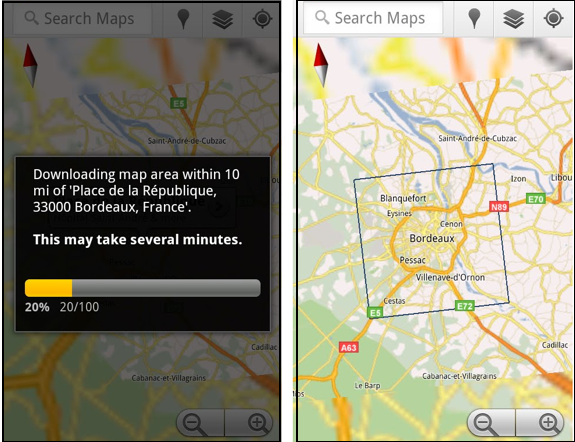
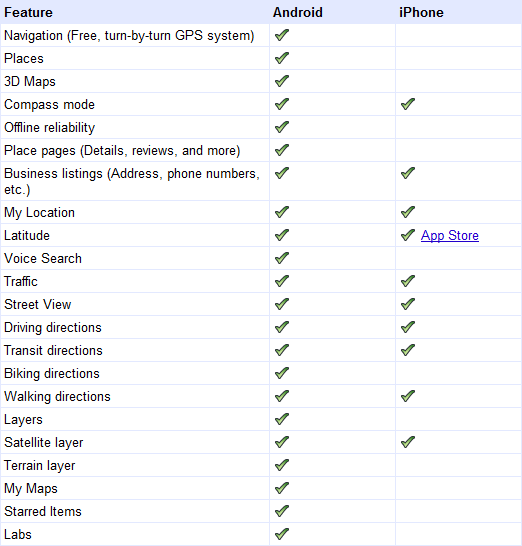
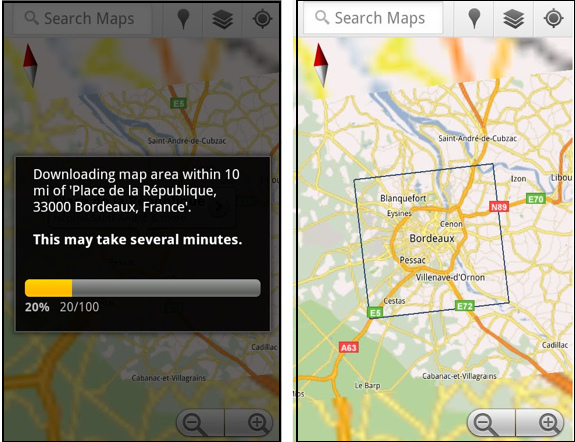
google-maps-navigation-portrait Here’s one for Chippy, the much anticipated Google Maps Navigation yesterday went live in 11 more countries. The UK and USA have been using the free turn by turn navigation service on Android for a while now and so far has proven very popular among its users.

Google Maps Navigation is an Internet-connected GPS navigation system that provides turn-by-turn voice guidance as a free feature of Google Maps. It uses the devices inbuilt GPS and also the data connection to download maps before your journey starts, this means if you go off route then you will need an active data connection and allowance for the application to reroute you. It also provides Street View images when available on the roads you are travelling on.

The new countries that have been added are Austria, Belgium, Canada, Denmark, France, Germany, Italy, the Netherlands, Portugal, Spain, and Switzerland for Android devices 1.6 and higher. Google have also flipped the switch on the beta of Search by voice for the countries listed above meaning no device handling is require while your on the move.

Let us know if you are located in one of the above countries on how Google Maps Navigation is working for you.

No Chrome OS at Computex 2010?

Tags: , , ,


Lets wind back to June last year, the web was buzzing with the news that Google had announced it was releasing an operating system, well a browser that acts like one. The software architecture is simple Google Chrome running within a new windowing system on top of a Linux kernel, its open source, lightweight  and Google intend to get to consumers in the second half of this year. When they announced the project 12 months ago Google stated “Google Chrome OS will run on both x86 as well as ARM chips and we are working with multiple OEMs to bring a number of netbooks to market next year.”

Now come to the present day and Computex 2010, the perfect theatre to show physical devices running your shiny new operating system, be them prototypes or final products and there are none?

To make matters worse, the news of Meego and demonstrations of the Tablet Experience user interface have left lasting impressions on not just me, but the likes of Joanna Stern of Engadget,

“We saw a lot of new technology demoed at Intel’s Computex keynote this afternoon, but the most impressive thing may have just been Meego running on a 10-inch Moorestown Quanta Redvale tablet. While the demo on stage was very brief, we caught up with some of the product managers right after the presser and convinced them to give us a peek at what is coming in 2011. To say we’re impressed with the “pre-alpha” version of the software is a huge understatement.”

Acer’s president Gianfranco Lanci pointed out at Intel’s e21FORUM 2010 meeting that Acer will launch netbooks and tablet PCs that adopt Intel’s latest Atom processor and will also preload the MeeGo platform on them.

Its obvious that MeeGo and Chrome OS are fundamentally different but given today’s age of publicity, advertising and hype, Google could have really done with having something to show at Computex.

ARM loves Android

Tags: , ,


I just stopped by the ARM room at Computex to pre-register for the press event and they kindly gave me a press pack which gives a hint about what they’ll be talking about.

IMG_3401

This is interesting because the press pack and press release talks almost exclusively about Android 2.2 as if nothing else mattered right now!

IMG_3401 (2)

Android, Fragmentation and the Possibility of a Non-Smartphone Marketplace.

Tags: , , , , ,


It’s a question I’ve been looking for an answer to for a long time. There are plenty of tablet manufacturers that are in the dark too. Why doesn’t Google allow Android Marketplace on non-phone devices?

It’s crippled the Archos 5, the Camangi Webstation, the Compaq Airlife 100 and many other devices. There are also OEMs out there that I speak too that can’t even open a dialog with Google on the subject.

It was fairly obvious that they wanted to protect and preserve the quality of the Android experience but it has taken until now for official words to reach the surface.

Google argues that the reason it doesn’t permit tablet vendors access to Android Market just yet is to prevent devices that fail comparability tests from actually fragmenting the platform.

Google, in this case, is none-other than Mr Android, Andy Rubin who in Michael Gartenbergs good article over at Engadget appears to argue that Android is not fragmenting, it’s just a fast developing environment that leaves older products in its wake and it’s up to everyone else to keep up. To me, it sounds like BS because 1 – you’ve got a native code development kit that could break apps left right and center. 2 – There are lamps, flashlights and screen sizes that have already broken compatibility. I have a Sony Ericsson X10-specific app that toggles the flashlight. 3 – There are switches in the marketplace that try (and often fail) to prevent fragmentation and incompatibility reaching customers and 4 – How can they say that when they’ve just introduced a huge element of fragmentation – Google TV – a non-smartphone platform that uses a completely different set of silicon with a different instruction set. Fragmentation is already there.

As a customer, I find this ‘keep up’ message rather worrying although to be fair to Google, there aren’t any quotes from Andy Rubin to go on here and Gartenberg may have just spinned this message. To customers, fragmentation is real. Customers live in the wake of product development. Products may be released every six months but that doesn’t mean that all the old products are thrown away. Google needs to make sure it keeps up the pace of innovation but not so fast that the customer is left with a pocketful of six-month old products that are considered ‘old.’ Micheal Gartenberg picks up on this:

I’d argue perhaps Android isn’t fragmented, at least according to the classical definition, but that the practical result is the same. Devices going obsolete in months and new operating systems released on weekly cycles make it difficult for even Google’s best partners to keep pace. Worse, users care onfronted with a dizzying array of devices, many of which are out of sync from a software perspective at the time of purchase — causing some to delay purchases in fear of buyer’s remorse or purchase a competing platform.

Listen, I don’t mind fragmentation. I think it comes with the territory and I think it’s something dev’elopers will always have to consider. Sure, it would be nice to have one set of hardware but where would that leave us! Why doesn’t Andy Rubin just admit it – it’s fragmented, that’s the way it will always be, it will get worse, deal with it. A non-fragmented Android is simply not possible any more.

Having got that out of the way, let us consider the marketplace for non-smartphone devices. Do Google consider tablets, MIDs, smart-books and related products to be a big market? With only one product out of hundreds actually having success and even then, only selling 1 million units you have to agree that it’s not exactly a proven market yet. These are niche categories right now and probably wouldn’t be big enough to support any large-scale business plan. The second consideration is, assuming Google do want to move forward with non-smartphone devices, how do they do it.

What devices are we talking about?

Tablets, navigation devices, ebook readers, slider handhelds, smart-books, cameras, gaming devices and a whole range of gadgets and gizmos that could benefit from a marketplace. [Sidenote: I’m looking forward to the day when a medium range digital camera is released with an ‘Nexus-One Back’ and access to all the hardware features. Can you imagine the applications that could be written!]

Solutions

There are three ways I see that Google could move forward. 1) Create multiple marketplaces. 2) Let the devices talk to marketplace so that incompatible apps can be removed from view 3) let the users provide feedback and the ability to remove down-graded apps from view and promote apps that are proven to work.

Of course, Google could also do nothing and let competitors like MeeGo and WebOS take up the strain. 3rd party Android marketplaces also have an opportunity.

Summary.

It looks like it will happen. Non-smartphone devices will get a real Marketplace. Obviously Google are considering it and when I see tweets from people like James Kendrick,  the GigaOM employee that was given a Nexus One running Android 2.2 before the Google IO conference saying “Android is getting ready for a serious run into the tablet space. Mark my words.” then I have to assume he knows somethin that we don’t and that there’s work going on right now.

Dell are working on the Looking Glass and Huawei on the Smakit S7. There’s even a Wifi-only  Dell Mini 5 / Streak planned. These companies have experience with Google Android and they know the value of Marketplace. They also know what Google will require of them so I doubt they will be planning tablets without knowing that marketplace is going to happen for tablets soon. Look to the release dates of these products for clues about Marketplace for non-smartphone devices.

Fragmentation in Android IS happening and developers need to get used to it. Mr Rubin needs developers and will do everything he can to placate them in discussions about fragmentation but the truth is that it’s going to get harder to develop for Android in the future. Consumers, on the other hand, can look forward to some interesting developments soon. Computex, next week, should be an eye opener.

Intel-Android News Changes the Dynamics

Tags: , , , , ,


Although we’ve been hearing bits and pieces about Android on Intel’s Moorestown platform over the last few months we’ve never really had it in writing from Intel. Today we have.

Almost hidden in the latter part of a Fact-Sheet (PDF)on the Moorestown / Z6xx launch today, Intel has this to say.

“As a founding member of the Open Handset Alliance (OHA), Intel has worked with Google over the past few years and is providing support for the Android platform at launch. The performance characteristics of the Intel Atom processor Z6xx Series are reflected across Android implementations making it a compelling platform for a range of handheld devices.”

Support for Moblin/MeeGo is also mentioned. Windows isn’t.

This changes the game somewhat in my opinion.

Firstly, Intel now has a non-Windows platform. Politically, that’s huge. This is probably the first Intel computing platform since Windows launched, that doesn’t support Windows!

Secondly, Intel have just pulled in support for one of the most interesting and developed ‘smart’ computing platforms there is. There’s no longer any need to convince customers that MeeGo is going to be great because the trust will already be there. What a set of brands – Intel, Google, Android. You wonder what the long-term aim is for MeeGo now. How long will they continue with MeeGo if Android on Intel becomes successful.

Moorestown and Android could really be a killer combination and it already scales to netbook-like performance to enable some very interesting tablet, MID and ‘smart’ book devices. 1M iPads proves that this new market is ripe.

This could also explain why Google haven’t yet opened the marketplace for tablets and other large-format handheld devices.

Here’s a video we took of Android running on Moorestown recently.

Intel press release.

Intel working with Android on Atom.

Tags: , ,


I remember back to the forming of the Open Handset Alliance back in Nov 2007 when the ‘Open Platform for Mobile Devices’ was announced. Intel were a founding member and it was unclear what silicon platform Android was going to use. I think the term Google used at the time was ‘processor independent.’ Soon after that, the thought of running Android in Intel faded away but Intel has remained a member. Recently I’ve been hearing more and more news about Android on X86 and in news out today from IDF in Beijing, it’s been confirmed.

It looks like this is all stemming from the news that Google and Intel are getting together to offer Google TV  [news was published by NYTimes on 17th March.]. Yes, Intel is involved with another project to build software for TV’s (MeeGo) but there’s no way that Intel are going to say ‘no’ if Google are interested in the platform.

The likely platform is ‘Sodaville’ which is aimed at media delivery through an Atom CPU and a GMA500 graphics and video processor in a highly integrated, low-cost and power-efficient package.  The platform is very similar to that used in MIDs, UMPCs and embedded applications. It’s also likely to be very similar to the upcoming platform for smartphones, Moorestown. (More on that tomorrow.)

In Beijing today, the story took another step forward when Rene James, GM of Intel’s software and services group, confirmed that Android was indeed running on Atom and was also running on the Smartphone platform. That’s Moorestown. Apparently, customers are interested.

No real surprises there to be honest. Android ‘running’ on an X86 platform is hardly groundbreaking news but it does highlight that Moorestown will not just be a MeeGo-only platform. Indeed, Windows, Chrome OS, OSX, Linux builds, Android and MeeGo would all work. It’s just a matter of getting the people (money) together to make it happen.

As I mentioned in the MeeGo article today –

Stay very closely tuned to the Linux Foundation Collaboration Summit which starts tomorrow and runs for three days. Intel, Nokia and Google are all there.

Maybe we’ll hear more very soon!

Progress: Google Looking at Android for Pads.

Tags: , , ,


archos9-chromium It should come as no surprise to anyone that Google is working on a tablet but even so, I can’t contain my enthusiasm for this news. Why? Because it’s Google and Android together in the MID/Pad/CID/Tablet space and that means that they’re actively thinking about getting Android, their apps AND THE MARKETPLACE on to other platforms. Marketplace is critical for seeding development and further interest in the sector.

There has been a lot of talk about ChromeOS being the choice for pads, MIDs and smart-books but I don’t see it happening that way. Chrome doesn’t have any of the excitement that a dynamic, finger-friendly UI, location-enabled OS with app-store brings. Chrome is for the table-top. Android is the mobile OS and that fits like a glove on a handheld device.

The news comes from the NYTimes (via Laptopmag) and highlights a number of interesting consumer internet device developments. The best of which is:

Google, for example, has been working with several hardware manufacturers to push its Android software, which was originally designed for mobile phones and is a direct competitor to Apple’s iPhone operating system. The company also hopes to make its own apps marketplace available for new Slate-like devices.

The article goes on to mention Dell, Acer, Microsoft, Nokia and Lenovo along with a device from HP known as the ‘half pint’ – a device measuring 6” diagonally. I like that thought. Check out the full article and the Laptopmag blog for more.

Google Reader Play on the iPad [video]

Tags: , , , , , , ,


photo.jpg Google somewhat quietly released Google Reader Play early last month. Reader Play is essentially an alternate way to view Google Reader and is designed to present interesting and relevant items in a simple and pleasing way — it seems particularly suited to large screened devices. While several people, upon release, noted that Reader Play would probably work great on large TVs, the first thing that came to my mind was how well it could work with the iPad. Of course, that was only a theory because we didn’t have an iPad at the time for testing. Now that the iPad has been released, we can give it a try.

To my delight, Reader Play works pretty darn well on the iPad. Part of this is because YouTube videos can be played directly inside Reader Play, without having to launch out to the external viewer. Note that this isn’t Flash, it’s simply the iPad recognizing the video as a YouTube video and playing it with it’s own special YouTube player right inside the frame. Have a look at Google Reader Play in action on the iPad in the video below:

Dell Mini 5 to Come with Amazon Books, Music, Video Capability.

Tags: , , , ,


This makes complete sense. Google provide the application channel and Amazon provide the content channel for the Dell Mini 5. [ Information]  This will set it apart from the rest of the bunch so Archos are going to have to think carefully about where they go next. A raw Archos tablet with no apps and no content channel is going to look naked next to the Dell Mini 5. As will all the other raw Android builds we’ve seen so far.

The information comes from Engadget who got hold of a promotional Flyer for the Dell Mini 5 that reveals the partnership.

amazondell

Dell probably have an exclusive on this based on the hardware form factor and video capabilities but I’m sure it won’t be long before you’ll find the .apk floating around. Maybe even in the Google Marketplace.

A second flyer reveals a colorful range of finishes which points towards a solid consumer focus. Let’s hope the prices are pointed that way too.

Source: Engadget

More Dell Mini 5 information and links in the database.

Buzz on Maps Brings it Together. (Demo Video)

Tags: , , , , , , , ,


image Not quite mobile computing but interesting anyway is Google’s Buzz. Its an extension of their social circle features and integrates messaging, timeline, media into mail and other Google apps. I won’t go over it in detail because there’s a ton of information and discussion already out there but I do want to talk a little bit about the Buzz layer on Google Maps for Mobile because at the same time as releasing the new feature on Gmail, Google also updated their maps clients to include Buzz features. You could argue that Nokia’s Ovi Maps and Ovi Contacts already have these features and that there are other apps and services out there that let you do this but I’m seeing at least the potential for some major integration across Google products here that, given their user base, will blow away the competition.

I’ve made a video demo with the N82 and the Omnia Pro which you’ll see below and personally, I think it’s exciting to finally see location, search, public multi-media messaging and threaded public discussion being pulled together on a map with my pre-existing ‘social circle’ in this way. I always thought Google Latitude had good underpinnings in terms of privacy and  ‘friending’ but it never took off and although Buzz doesn’t seem 100% connected to Latitude’s idea of multi-tiered and friend-dependant privacy, it’s clear that Google could make the final connections very easily. Linking search, local friends, local events, photography in a live, localised way like this seems to have way more potential than the simple 140 character smart-bomb option.

There are still some things missing though. A client app would be nice but I assume that Tweetdeck and many of the other multi-protocol social messaging apps out there will link in soon and either Google Mail for Mobile or Gtalk will probably evolve along with Google Maps for Mobile. There’s also a lack of ability to embed the live maps and message stream in other places. The ability to ‘friend’ someone from the Maps Mobile app is also missing and of course, using GPS, 3G, maps, screen, GPU and GPU is going to KILL your smartphone battery life! Clearly a secondary device, something like the Dell Mini 5 with Buzz application is going to be better if you need to use this more than an hour a day.

It’s early days but I can see a lot of potential here. The ability to see local ‘buzz’ is just great and combined with local friend notification (already in Latitude) and event / threshold  alerting, this is going to be a great step forward for mobile communications capabilities. Whether people latch on to the idea i another matter but in a quick test with my wife this morning, she seemed happy to add ‘the Buzz’ to her familiar and often-used Google Maps application.  I can’t say the same introducing her to twitter and this could be the major advantage for Google; familiarity.

Although my Gmail hasnt been enhanced with Buzz yet (expected in the next few days here in Germany) I’ve been testing out the features from Maps Mobile. My ‘stream’ is here.

Sort Products In Our Product Database By:

Partners

Archives