Tag Archive | "smartphone"

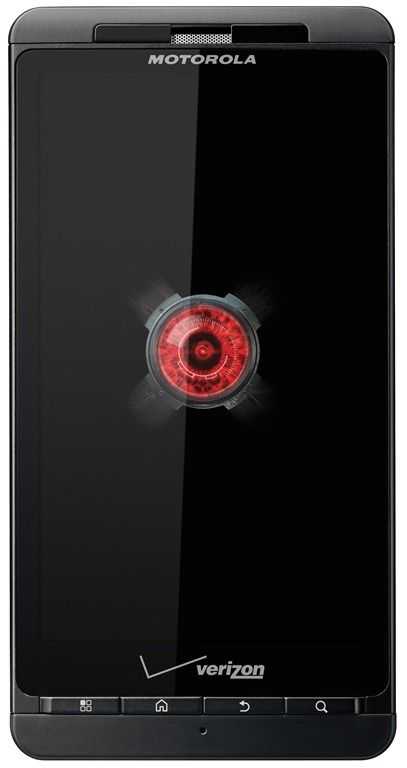
Engadget Previews the Motorola Droid X

Tags: , , , ,


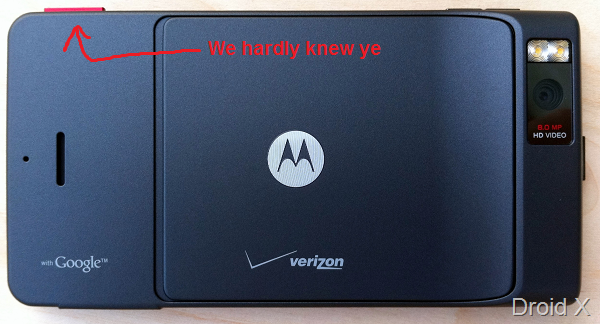
motoroladroidxengadget01

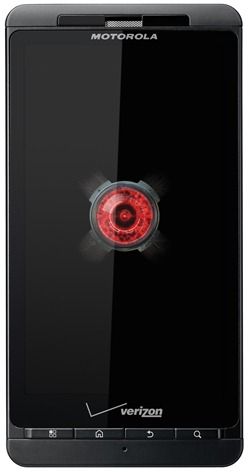
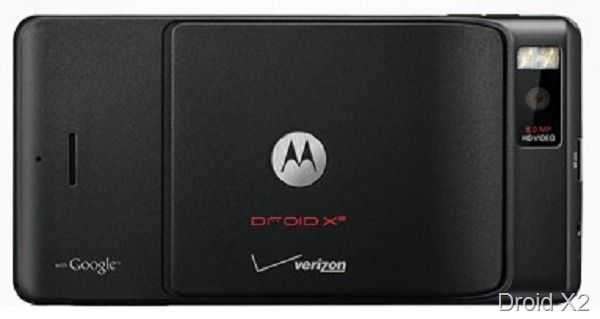
Joanna Stern of Engadget has a thorough preview of the upcoming Motorola Droid X, and man… does that thing look huge!

As we see smartphones and MIDs continue to become one in the same, smartphones are getting ever larger; good news for the rather large Dell Streak [Portal page]. The Motorola Droid X has a 4.4” screen with an 854×480 resolution, which is nearly an inch larger than the iPhone 4’s 3.5” screen [Portal page]. Here’s a list of unofficial specs for the Droid X:

  • Android 2.1 with a custom Motorola (MotoBlur) interface
  • 4.4” capacitive screen @ 854×480
  • 8 MP camera 720p HD recording capable
  • 1GHz  ARMv7 CPU (Engadget guesses OMAP3630)

Verizon is going to be officially announcing the Droid X on June 23rd (a day before the iPhone 4 goes on sale, what a coincidence!) , so I’m sure we’ll see full specs then. Jump through to Engadget’s article for some videos of the Droid X in action, and check out their galleries:

Dell Streak Live Session Videos

Tags: , , , , , ,


Here are the video recordings for the Dell Streak live session I did this evening. Thanks to the people in the chat room who asked questions, answered questions and corrected my errors! We had over 300 people drop in for the session. Note that Ustream playback features often get overloaded in the U.S. afternoon/evening so be patient!

Session 1, 17 mins, includes an overview of the device, specifications and some initial impressions.

Session 2, 50 minutes, includes an overview of the keyboard, browsing, video, music and camera.

More information on the Dell Streak in the information page.

Dell Streak First Impressions

Tags: , , , ,


Thanks to JKKMobile, I’ve had a Dell Streak for a few days and ahead of the live review session tonight, it’s time to give you some first impressions.

IMG_3708

I don’t have a full retail version here so it’s only fair to point out that the firmware isn’t final on the device but having said that, it’s close, it’s useable and actually, it’s quite good!

Starting with the look and feel, it’s a great first five minutes. The glass screen blends nicely into the glossy, stylish casing. The shiny metal rear only helps to make you feel you’ve got a quality device in your hands. Compared to the Archos 5, it’s a step ahead. The 5” (true 5” – bigger than the Archos 5) screen looks stunning with blacks and clarity that you’ll never see on a resistive touchscreen device and rarely see on a smartphone. In portrait mode you get get a comfortable one-handed experience that serves very well for reading Tweets, Google Reader, Emails, maps and ebooks. This is a very very nice 30-50cm one-handed experience. Flip the device round into landscape mode and you move into a more productive stance with the on-screen thumboard providing good input capability. The keyboard is offset due to having a numeric pad on the right side but I’m getting used to it and finding the numeric pad to be as good as a 5th row. It’s a shame there’s no stand though. 5” is good for seat-back videos.

Sizing is going to be a major issue for most on the Streak. My wife loves it and wants to upgrade to it as her phone straight away but she, like many other women, keeps her phone in her bag. For those that keep their phone in their pocket, you’ll have to think about it carefully because it’s not that comfortable. Holding the device to the ear might be a problem for some too as it’s relatively huge but for me, someone that doesn’t use voice that much and would be proud to show off the device, that’s not an issue.

In terms of specifications, the Streak impresses with a 1Ghz Snapdragon processing platform, 5MP cam with dual-LED flash, 2GB storage, micro-SD slot (no hot-swap), GSM, UMTS, Wifi and BT connectivity, compass, GPS, ambient light sensor, accelerometer and capacative Android buttons on the frame. There isn’t a dedicated search button but you will find a two-stage shutter focus/release button and a volume rocker switch. All seem to be high quality.

As for software and usability, I’m loving it. Browsing is (relative to other smartphones) in the top league and the user interface is fast and fluid. Having the full Google Android experience makes so much difference and it highlights the major issue with what i’m calling ‘unfinished Android products’ like the Archos 5. The included photo and video application is welcome although it lacks codec support. I was impressed that it could play back a 6.5Mbps WMV 720p file that most netbooks would choke on. I was less impressed that it couldn’t handle some H.264 files, Divx and a few other files I have in my test suite. The Archos wins that round!

As for battery life, it’s looking better than expected. Despite the large screen, it runs for about the same amount of time as the Xperia X10 which, in turn is an hour or so behind the HTC Desire. You’ll need to take the (proprietary) USB charging cable though, a back-up battery or a back-up phone!

It isn’t all good though because the Streak highlights the big problem with Android. The browser is not up to scratch. Go to Google Docs to try and do some work and you’re met with a brick wall.

IMG_3709

This isn’t the Streak’s fault, it’s just that Android doesn’t offer a full internet experience yet and with the Dell Streak being so big and Internet-centric, you’l hit these brick walls more often than on other devices. It’s not good enough and getting the full browser experience (including Flash) needs to be a top priority.

Other notes:

  • GPS doesnt appear to have A-GPS support in this firmware but Android uses Google Location to assist applications. Full GPS capabilites take a little longer to sync-up than with other phones i’ve used.
  • Mono speaker is clear
  • Screen brightness is very good. You can use this for short-term sessions in the sun.
  • Camera is typical Android – OK in daylight – Poor in low-light.
  • Video, in daylight, is reasonable quality. Here’s a sample although it appears to have lost some quality in conversion to YouTube. The original H.264 file is better.

Overall, the Streak is performing as expected. It’s an interesting take on convergence although one gets the feeling that voice is only there to satisfy Googles applications-suite requirements. If you compare it to Nokia’s take on convergence which centers around a smaller screen, you get the feeling that this form-factor is better. Of course I’d like a slider keyboard on the Streak but I’m prepared to take a hit in this case because I might go and buy a retail version of this to replace my Xperia X10. There’s still room for improvement in the camera department but despite that, I’d still call the Dell Streak the best mobile internet device yet. As for it’s use as a phone, that’s up to you. I’ll just be dropping a data card into this and continuing to carry my N82 for voice, SMS and the Xenon-powered night-time camera.

IMG_3707

More information, links (including a few early reviews of full retail versions) available in the information page.

Jkk Goes Hands-on with the Dell Streak (aka Mini 5)

Tags: , , , ,


dell mini 5 jkk Jkk seems to have gotten his hands on the official European version of the Dell Streak [Portal page] (aka the Dell Mini 5) which launches soon in Europe. He has a thorough 24 minute video walkthrough with the device which you can find over at his site.

A few notes about the device from Jkk:

- I would like it to have a kick stand on it

- Dell UI is ok but I think I still would go with standard Android

- It should have a micro usb port for charging.. I hate carrying custom cables

- Waiting for Android 2.2 will feel looooong.

- Battery life seems better than I thought.. more testing needed..

And a few thoughts of my own after watching his walkthrough:

  • Headphone jack position couldn’t be worse. The device is already very big, if people are expected to walk around with the Dell Streak in their pocket, having a headphone jack stick out the side of the device while in the pocket will be very annoying.
  • The fact that the Dell Streak is only running Android 1.6 is really disappointing. This is what happens when you take months and months and months to get a product to market. Presumably it’ll get Android 2.2 eventually, but that won’t happen until Dell gets around to integrating their custom Android interface into 2.2, then deploying it to customers. The sad part is that the Dell Streak is as a disadvantage out of the gate, simply because it isn’t running the latest firmware.

Intel Unveils Atom Z6XX Smartphone Platform

Tags: , , , , , , , , ,


Intel have just released an news about their smartphone and tablet platform previously known as Moorestown. The platform is a follow-on from the MID-focused platform, Menlow and includes power saving and power-boosting features that could see service in some very high-end smart devices. The processing unit is known as the Z6XX (assume there will be variants) and the control unit is known as MP20.

I’ve done some analysis of the news over at UMPCPortal but here’s a summary.

Collectively these new chips deliver significantly lower power including >50x reduction in idle power, >20x reduction in audio power, and 2-3x reductions across browsing and video scenarios – all at the platform level when compared to Intel’s previous-generation product1. These power savings translate into >10 days of standby, up to 2 days of audio playback and 4-5 hours of browsing and video battery life. When combined with 1.5-3x higher compute performance, 2-4x richer graphics, >4x higher JavaScript performance, and support for full HD 1080p high-profile video decoding and 720p HD video recording, these low-power innovations bring a rich, PC-like visual experience to powerful handheld computers.

So you’ve got some new power-saving technology there that should allow devices to be built around a standard 1500mah battery but that’s not all.

These power management capabilities, when combined with Intel® Burst Performance Technology for high-performance on demand, and Intel’s Bus Turbo Mode for high-bandwidth on demand, help to deliver industry leading performance and power efficiency across a range of handheld devices.

These ‘turbo’ features will take the platform to 1.5Ghz and there’ll even be a version that will boost to 1.9Ghz. That’s more than a netbook! So if you add the low-power idle features with the turbo modes you’ve got a platform that spans a wide range of uses. With MeeGo being developed alongside Moorestown and a wave of interest in ‘smart’ devices, Intel have timed it well.

The press release even mentions Android. We saw it back in Feb but it looks like it’s become a core part of the Moorestown strategy now.

Here’s the video of Android running on a Moorestown smartphone from MWC in Feb.

Additional info: What Moorestown Means for Consumers.

We’re with Intel at Computex next month (I’ve been invited to Computex through the Intel Insider program) where I’m sure we’ll hear about launch dates, devices and a whole lot more. Expect videos and hands-on!

Z6XX Press Kit

Morgan Stanley Report: Moorestown Launches. Intel/Nokia Smartphone expected in Mid-Late 2011

Tags: , , , , , , ,


In a report from Morgan Stanley we find out that Intel have launched the Moorestown platform today.

Update: Information is obviously under embargo at this stage but there are a string of tweets that have just gone through that mention Moorestown and a Z6xx processor. e.g. this one. “Intel Z6xx smart-phone processor prototypes: Moorestown massacre: Intel says that fantasy phone is on its way, wit…” They all link to a Cnet UK article that has obviously been removed. The current Menlow platform uses Z5xx processors. This makes sense.

Update 2: Everything is official now. The Z6xx has been launched. Interesting news on Android too.

Morgan Stanley have studied Moorestown and believe that Intel is ‘well positioned with MeeGo’ and that video performance will compare with the latest smartphone platforms, including Tegra 2. They also think that Moorestown will ‘meet or exceed’ current smartphone performance. It’s a bright report that will definitely give the ARM ecosystem partners something to think about.

At its Moorestown launch on May 4, we expect
Intel to introduce and advocate multiple benchmarks to
measure and compare highly debated performance and
power consumption attributes of Smartphone
application processors. In this report, we present
several comparison frameworks, which we plan to
update after actual Moorestown data become available.
Our view is that with Moorestown, Intel will finally start to
meet the power budget for Smartphones, but will show
more favorably on processing power benchmarks.

See also: UMPCPortal Moorestown analysis here.

The financial report also states:

Our checks indicate that Intel and Nokia are also collaborating on a
Smartphone device, which we think is likely to become available in the market in
mid-to-late 2011.

Considering that this report is focusing purely on Intel’s smartphone processor and this statement appears in a section on MeeGo, the report implies that the Nokia phone will be based on Intel’s Moorestown platform and running MeeGo.

The Morgan Stanley report was published on May 3rd and has been promoted by Intel in its ‘Chip Shot’ blog. The full PDF, an interesting read if you’re comparing smartphone platforms, is available as a download here. (or via the Chip Shot blog linked above.)

Stand-by for official Moorestown launch info!

http://twitter.com/selvan_tengy/statuses/13380154280

A ‘Smart’ Netbook Image. Look! No Microsoft.

Tags: , , , , , ,


I just hacked this image up (apologies HP and Apple) as an easy way to illustrate how Windows on netbooks is at risk. Add either of the touch, UI, app store and always-on features and you’ve got something that Microsoft can’t currently compete with.

ipadbook

This scenario would immediately affect sales of Windows-netbooks where people are buying netbooks as second devices, gadgets or for family, friend and other social and casual (online or off) scenarios . For productivity scenarios, Windows still counts because the apps don’t exist on the common app-store ecosystems yet. I don’t have figures but in the U.S. and Europe I guess 30% of netbooks are bought as a second PC, a gadget or for the sofa/family/friend social (online and off) scenario. That’s a lot of lost Windows 7 license sales.

I talked about the 4 ‘lock-in’ opportunities (more than just ‘good’ opportunities’) for ‘Social Netbooks’ in this article. Google could make it happen by enabling Marketplace on Android – A potential risk for Intel. Intel themselves could make it happen with products like Moorestown, MeeGo and AppUp  or a surprise player could enter the market.

My opinion is that  THIS WILL HAPPEN. Someone will add a touchable, dynamic, fun user interface, an app-store, location and always-on features to a netbook form factor leaving just the productive applications as the missing piece. Given the chance (i.e. an application store) developers will move quickly to fill those  gaps in software for productive uses making the smart device BETTER than the Windows-based, traditional netbook device. What that means for Microsoft is that a huge portion of the netbook market could be served by a  non-Windows OS solutions. Just think of the market positioning too. Isn’t it easier to market an ‘upgrade’ from a smartphone than a ‘downgrade’ from a laptop.

When does this happen? I’m expecting Google to announce a move into the ‘third screen’ space with Android very soon. Intel are ready with Moorestown and MeeGo in Q4 so the change starts to happen in 2011. I estimate that while netbook sales (of both sub-genres) will increase, the percentage of Microsoft netbooks will stay level or even drop. [Sidenote: Intel thinks that the non-windows sales will reduce in percentage by 2012.  I think they are underestimating the 'smart' device opportunity.]

Is Intel at risk? Yes. If Google, Android and ARM reach the flag before Intel and MeeGo, Intel start to lose market share in the netbook market but also remember, Android could run on Intel’s new Moorestown platform offering smartbook manufacturers a more powerful computing experience. Also note that if netbooks flip to non-Windows ‘smart’ devices it serves as a nice dividing line between laptops and netbooks for Intel, restoring the need for different netbook, CULV and laptop processing platforms and allowing them to make more and more powerful Atom CPUs without hurting the laptop segment.

I’m not the first to talk about this and it’s certainly not the first time I’ve thought about it myself but that image just makes it crystal clear for me. Netbooks will change dramatically. If Google doesn’t enable it, someone else will and in any case, Microsoft will suffer.

Intel’s Moorestown to Compete in ‘Handheld Computers’ Sector

Tags: , , , , ,


This is a follow-on article to ‘Is Tunnel Creek the new Consumer Handheld CPU from Intel? No. (Better Things Are Coming)

I define a smart device as being mobile, always on, always connected, sensor-aware and having what I call a dynamic operating system. That is, an OS that is interesting to use, stylish and that is ‘point-of-sale capable’ via an active application and content ecosystem. The prime example of a dynamic operating system is Apple’s iPhone OS.

In this article I want to talk about Intel’s Moorestown, a platform Intel has been public about  for over 2 years. It’s Intel’s stab at a platform for the mobile, always-on, always connected segment. That is, smart devices. From smartphones and smart tablets all the way up to smart netbooks. As ARM-based smartphones get bigger and more powerful and already have ALL the smart features required, there’s a huge risk to Intel so clearly there’s a serious business reason for doing this and getting it right.

At IDF in Beijing today, Pankaj Kedia presented the latest information on the Moorestown platform and in his slides, he gives a good overview of where the device is targeted and what its key features are. Let me walk you through some of the slides. (Obviously I wasn’t present for the presentation and i’m not privvy to Pankaj’s notes. These are simply my opinions.)

threat-opportunity

Here’s the threat. I doubt Pankaj would have used that expression though as it’s clearly being taken as an opportunity.

tablets

For the first time, Intel have started to reference the tablet segment when talking about Moorestown. Clearly this is becoming a topic of interest for their potential customers. The UMPC years are referenced as the ‘first coming.’

roadmap

Here’s a diagram that shows where Moorestown would sit in terms of products. If I had drawn that slide I would have also included the ‘smart’ netbook segment. Moorestown is likely to scale up to processing power beyond the top of what ARM-based platforms can product right now and there’s a good opportunity to defend against the risk of ARM moving into that segment of the netbook market. (See tomorrows article ‘A Smart Netbook Image’ for more on that.)

platform-overview

This is as much of the architecture as has been made public so far but thought leaks and discussions with engineers and developers we can say with some confidence that the graphics and hardware video acceleration is based on the GMA500 GPU (possibly clocked higher than on Menlow) and included 720p hardware encoding (for HD video recording.) The bus between Langwell and Lincroft is likely to be DMI (not PCIe) and as you can see, there are tightly coupled control and communications chips. Brierstown is responsible for power management.

featureset

As with Tunnel Creek, the CPU includes hyperthreading which can boost effective performance. Burst (bus boost) and Turbo (cpu boost) technology is also included. Intel have previously said that the nominal clockrate is 600Mhz with boosting to 1.6Ghz although we suspect there will be different versions of Lincroft spanning smartphone to netbook applications. One of the most important features and something that sets Lincroft apart from  Tunnel Creek is ‘Power Gating’ which allows Moorestown to compete with high-end ARM-based smartphone platforms. It is this feature that is allowing the CPU to idle to 1/50th of the idle power we saw on Menlow.

More information on Power Gating in this article

power-management

An interesting point from this slide is ‘OS Guided’ power management. What that means is that some of the power management features won’t work with Windows. MeeGo is the primary operating system for this platform and the two products are being developed side-by-side. Overall, we should see a 50% platform (not including screen backlight I assume) power reduction in average usage scenarios, and huge improvements in idle power drain. Overall it allows the platform to run in a similar power profile as high-end ARM-based solutions such as Tegra 2, Ti OMAP 34xx and Apples A4 solution.

The next public check-point for Intel will be Computex in Taiwan, June 2010 so unless Intel (or their customers) release information before then, we’ll have to wait a few months for more details. I’ll be in Taiwan for Computex so stay tuned for more coverage.

Note: Products are still planned for the second half of 2010. Two products have been announced. The LG GW990 smartphone and the Open Peek Media Phone.

Slides courtesy of Intel and available in the ‘Content Catalogue

MeeGo at IDF. Netbook and Handheld Eye Candy, Chrome, Fennec and Lots of Developer Details.

Tags: , , , , , , ,


MeeGo gets an outing in China this week as Intel takes its developer-focused conference, IDF, to Beijing. As I write this, Intel’s Lynn Wang, Strategic Relationship Manager and Rao Yeleswarapu, a Product Marketing Manager have just finished their talk on MeeGo Technology and Benefits. Danny Zhang, Senior Engineering Manager and Horace Li a Software Engineer with Intel have also given a technical overview talk.

Update: MeeGo 1.0 for Netbooks is now available.

As always, Intel publish the slides from the talks and they contain some great new information. I’ve picked out a few interesting slides from the first presentation which also include the first images of MeeGo’s handheld reference UI for smartphones.

Netbooks.

First off, lets look at the Netbook feature list for MeeGo (we assume 1.0) which confirms a previous tidbit that I picked up from DevMob (that apparently, shouldn’t have leaked.) Mozilla’s browser will be replaced by Chrome (or Chromium, the open source browser.) Quite how significant that if for Mozilla I don’t know but it’s something that should generate quite some discussion.  [Sidenote: There's been a lot of Google/Intel/Android/Chrome rumors lately. Relationships are definitely good and don't forget, Intel is part of the OHA. Stay very closely tuned to the Linux Foundation Collaboration Summit which starts tomorrow and runs for three days. Intel, Nokia and Google are all there. I wish I was too but i'll be glued to the live stream as much as I can.]

MeeGo-Netbook

You’ll also see that the social messaging app is to be redesigned (the application on Moblin 2.1 very very thin indeed) along with the camera application,email and calendar and date/time app. Best of all, the media application will get an overhaul. Again, the media app on Moblin was extremely basic. Remember that what drops out of MeeGo is not necessarily what you’ll see on netbooks. These code drops (starting with 1.0 in May) are for 3rd partys to take and build on so what you see in V1.0 is not what you’ll see in a final, retail build delivered on a netbook.

In other news, a number of companies have just re-affirmed their support for MeeGo as it transistions out of the Maemo brand. Note that Canonical isn’t in the list. That’s what happens when you move to an RPM-based distro I guess!
Note that the promised touch and gesture support is in there although I don’t see sensor support yet. That’s important for GPS. (It is, however, mentioned in other parts of the presentation.) Also missing is any mention of an application store. Intel’s AppUp is available for Moblin, OVI for Maemo so I wonder if this is simply left out of the core and left up to the OEMs. Remember that happened with Skype on Maemo 5, hopefully that particular relationship, optimisation and integration will spread over to netbooks.

As for netbook eye candy, here’s a snip from the presentation. I don’t know if it’s the proposed 1.0 UI though.

meego-netbook-ui

The center column has been dropped from the home zone and filled out with social network tiles. Having used these on Moblin, all I can say is – inefficient. 13 status updates on a 1024×600 screen is not an efficient way to use the device for anyone remotely familiar with making friends on the Internet. Let’s hope that the MeeGo UI teams offer an ‘advanced’ front end. Again, it’s not clear if this actually is the UI for release 1.0 though. Update: It is!

Handhelds.

It’s not clear whether this is Intel’s proposal here of if this is 100% agreed between Nokia and Intel but this is what Intel have to say about handhelds using Intel architecture.

meego-handheld-features

As you can see, Fennec, the mobile browser from Mozilla, has been chosen to present the Web. You’ll also get Flash support. Contacts and dialer functions will be integrated (as you’d expect) and there will be VOIP (it will be interesting to see if carriers want that ripped out) and instant messaging. I’m happy to see that the social networking ‘integrated experience’ is mentioned because this is an excellent core feature on the Maemo 5-based Nokia N900. Data sync is also provided along with an LBS app indicating that at least GPS sensors will be supported.

And now for the smartphone eye candy, including cute doggie!

Meego-handheld-ui-3 Meego-handheld-ui-1
Portrait mode support. N900/Maemo fans rejoice! Note the interesting activity stream in the first picture.
One would assume that emails, tweets and other network events can be included in that stream.

Meego-handheld-ui-2

This is typical understated European styling and I bet Nokia were heavily involved here. Personally I love the design but remember, once again this is just a reference design. It’s the sort of UI you’ll see if you take the 1.0 build and drop it on an Aava Moorestown reference design (which I’m trying hard to get hold of) and possibly, the N900. As I said before, I’m not sure if this is Intel’s proposal for the handheld UI or an agreed, across-the-board Nokia/Intel final reference design. We’ll see in May when V1.0 drops.

Timescales.

I mentioned the roadmap on my MeeGo journal a few weeks ago and Intel have re-affirmed those in a nice easy-to-understand slide.

meego-timescalesThe key date for me is the v1.1 release in the latter part of October. That’s when the MeeGo Summit is likely to occur and it’s right in the Q4 timeframe for product availability. LG GW990, Nokia Nxxx and who knows what else we’ll see. Interestingly, the U.S-based Intel Developer Forum will be in the middle of Sept so it will be interesting to see if Intel and partners have products to announce. October will be a very exciting time and wherever that MeeGo Summit is, i’ll be there!

MeeGo Developers.

You’ve got your very own PDF to browse through too but this slide just smacks me in the face…

meego-stores

‘Cross  App Store Developement’ is something special for devs to consider. The diagram doesn’t actually do the feature justice because it omits to mention the Intel app-store framework that can be used to make branded 3rd-party app stores. One API, many stores, many devices. In a separate presentation on the AppUp store I saw this… line. “World’s largest potential TAM (for a single API) “ When you think of the opportunity there, the mind boggles. Smartphones, Netbooks and the many many devices in-between including home, car and TV.

meego-architechture For more (very) detailed information on the MeeGo stack and the development toolkit, download and read SFTS010 from the content catalogue. (I can’t directly link as it’s a one-time URL used for statistics and tracking.)

all the above slides were taken from the publicly available PDF file SFTS009 available through in content catalogue.

Stay tuned to that catalogue over the next 48 hours as more PDF’s feed in. Particularly interesting could be the Moorestown presentation.

Smartphones Break 10-second Browsing Barrier.

Tags: , , ,


Maybe I should have posted this article at Carrypad rather than UMPCPortal as it pertains to the progress that ARM-based devices have made in terms of browsing speed. Just two years ago I wouldn’t have given an ARM-based system a second look if I was thinking of doing an web-based work but now they are challenging low-end PC’s and enabling the sort of devices we cover here on Carrypad. So far, Intel haven’t quite reached down into this area of click consumer computing devices yet.

The question does remain though – What advantage would a 5″ or 7″ device bring over something like the Motorola Droid? Personally I want a 5″ device for an even better quality browsing experience, ebook reading, navigation, 1 meter video experience and a huge battery. It WILL be a second device but that’s fine by me be cause it means I don’t have to have a very expensive high-end smartphone as a 24/7 device.

Smartphones Break the 10-second Barrier. | UMPCPortal – Ultra Mobile Personal Computing.

Big Phone Fans Go Crazy over the Evo.

Tags: , , , ,


If you didn’t catch the news yesterday, Sprint has announced a new phone called the Evo which is getting everyone excited. At least those that have huge pockets are getting excited because the Evo is the same size as the HTC HD2 and that’s HUGE! I tested the HTC HD2 out a while back and just a few seconds with it told me it could never be an all day phone for most people. I had the same experience with the TG01. It turns out that many of you think a 4.3” phone is OK though. 50-60% of you to be more exact. I’m not sure how many of you have actually tried using such a big phone but I’ll admit there are plenty of people out there that would use this as a ‘pro phone’ for the daytime which keeping a smaller, more practical phone for social use.

evo

Availability and cost will be the next issue because clearly this is a flagship phone. Not only for Sprint but for WiMax too because 4G and 3G are included in this phone. Not only that; check out the spec list known so far…

  • 1 GHz Qualcomm Snapdragon CPU
  • 8 megapixel camera with HD video recording capability and HDMI out
  • 1.3 megapixel front-facing camera
  • Google Android 2.1
  • Wi-Max, EVDO, Wi-Fi and a mobile hotspot utility to share mobile broadband with up to eight devices over Wi-Fi
  • 4.3″ multitouch capacitive display at 800 x 480 resolution.

(Via JKOntheRun)

That’s pretty much the most highly specified phone in the world right now so you can imagine what the unsubsidised price is going to be! I guess buyers are looking at a $100 per month contract here and as for the phone, I find it hard to believe it would be less than $400 in subsidised form. That’s close to $3000 total cost of ownership over 24 months.

There are three other major questions too:

  • Wimax battery life (Evo only has a 5.5wh battery) / Coverage / Speed
  • U.S. / Sprint Only
  • Summer availability (could be up to September – 6 months away)

There’s also no keyboard which might put off pro users.

Choice is great and its also great to see Android smartphones reaching up into ’2nd-device’ and MID territory so we’ll be watching to see if all the excitement translates to purchases or if people back-off based on price, new competitors or the size issue.

Acer’s Low-Cost Liquid adds E’s

Tags: , , , ,


A phone I’ve had my eye on in Europe for quite a while now is the Acer Liquid. With a Snapdragon processor, capacitive touchscreen and a good-looking set of specifications you’d expect it to cost more than it does but if you’re in the EU, this little pocket rocket can be picked up for under 300 Euros inclusive of taxes. Unlocked! Compare that to the 400-500 that you’ll pay for a Nexus One and you see why it becomes interesting as a sub-year phone or a good device for keeping track of the Android ecosystem. The only problem is that it runs Android 1.6.

Fortunately, Acer will be releasing the Liquid E soon and with Android 2.1 it should bring some great improvements along with the possibility of multitouch, Google Navigation, Buzz and other features that are only possible with Android 2. Unfortunately, when I visited Acer at MWC there wasn’t anyone around to answer my questions so I was left like a schoolboy playing with the device to find out what I could.

Acer will have to keep the price down on this to compete with the incoming HTC Android devices but if they do, it’s a chance  make an lower-risk investment in Android at a time when new devices are coming in thick and fast.

Mixing It Up with Android on a Moorestown phone. (Video includes new Moorestown info.)

Tags: , , ,


ABCD0017

Intel are certainly not scared of operating systems. While we were at the Pepcom MWC event yesterday we got to see the Aaava Moorestown prototype running Android. Clearly Aava and Intel just want to demonstrate that anything is possible so I guess next year we can expect Windows Phone 7 to be running on it!!!

Watch for two interesting items of news in the video.

  • Moorestown is clocking at 600Mhz on phones at the moment but has a turbo mode that will peak at 1.5Ghz.
  • There Windows (desktop) version of Moorestown will be called Moorestown-W

High-End Android Slider for $200! Inbrics M1

Tags: , , , , , ,


If Inbrics really can bring the M1 to market for $200 then we’re looking at a very good value MID/Phone but somehow I get the feeling that the mention of $200 was really a ‘CES Press Special’  i.e. whatever you say in Vegas, stays in Vegas!  The market could bear $300 for something like this so there’s no reason it would launch at such a low price.

inbricsm1mid

A capacitive 800×480 screen on Cortex with a full implementation of Android along with a nice design and that productivity-helping slider keyboard makes this a ‘must watch’ device. We would have like to have seen a larger screen for real high-end usage and we wonder how long this device will look ‘high-end’ considering the pace that new high-end smartphones are entering the market but it’s interesting all the same.

Here’s a video of the device at CES a few weeks ago.

Thanks to Netbooknews for ‘helping hands’ on this video.

Sort Products In Our Product Database By:

Partners

Archives